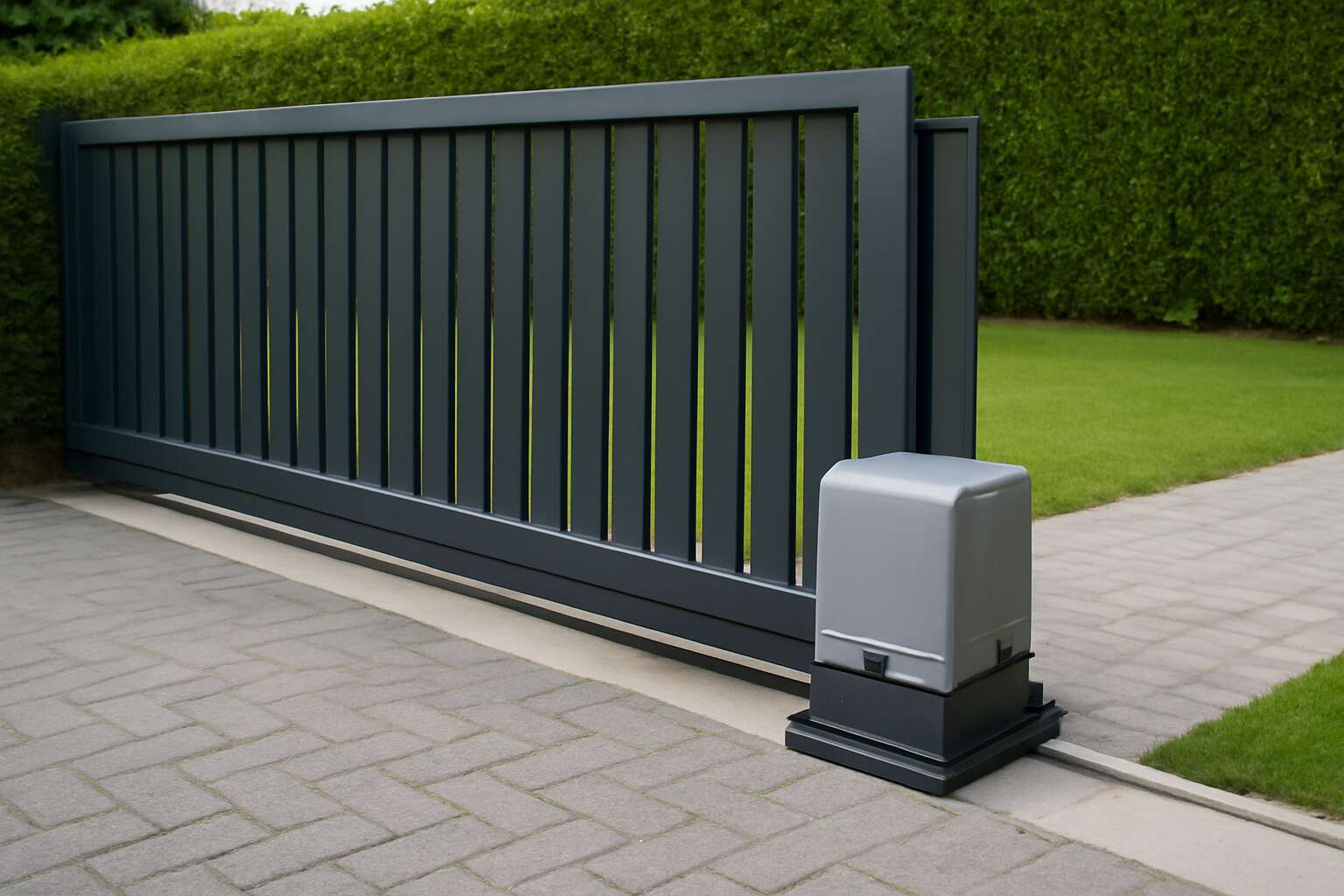
Buying Guide for Sliding Gate Motor Kits
What is a sliding gate motor kit and why you need one
“Security should move like wind, not shout like sirens,” a craftsman once told me. In SA, gates that glide quietly become the first line of defense and daily convenience, a quiet guardian at the threshold.
A sliding gate motor kit is a complete package that powers a sliding gate, including motor, track, control board, remote, and safety sensors. It provides smooth, reliable operation and reduces wear on manual rails, letting your entrance open at a touch, rain or shine.
Buying guide essentials include:
- Compatibility with your gate’s size and weight
- Power options ( mains or solar)
- Safety features (photocells, obstacle detection, automatic reverse)
In South Africa, local support and service availability ensure ongoing performance and peace of mind.
Key components of a sliding gate motor kit
“Security should move like wind, not shout like sirens,” a craftsman once told me. In South Africa, the buying journey for a sliding gate motor kit is less about bravado and more about rhythm—reliability, quiet operation, and a service network you can trust. This guide doesn’t swamp you with jargon; it helps you see the core components that sustain daily life at the gate, letting you feel the difference between mere movement and true guarding.
- Motor unit with torque suited to your gate’s weight
- Track, rollers and alignment for smooth travel
- Control board syncing remotes, sensors and access
- Safety sensors: photocells and obstacle detection
- Power options: mains or solar with backup
With the right considerations, your sliding gate motor kit becomes a quiet sentinel at the threshold, backed by local SA support and service for ongoing peace of mind.
How to choose the right kit for your gate size and type
The right kit is quiet and steady, not showy. In South Africa, the smart buying choice hinges on fit and reliability. “Reliability beats flash,” a seasoned installer told me, and the gate proves it every day when it opens with a soft sigh rather than a shout.
To pick the right kit, size and type matter most. For a sliding gate motor kit, start with gate weight, length, and track geometry. Then tune torque to the load, confirm track alignment, and choose a drive that fits your fence line. Consider these factors:
- Gate weight and travel distance
- Track length and roller alignment
- Power source options: mains or solar
- Remote and sensor compatibility
Engage a SA service network for local support and parts availability, because ongoing peace of mind comes from service after install.
A well-chosen kit feels like a quiet sentinel at the threshold.
Common mistakes to avoid when purchasing
Buying a sliding gate motor kit is more about lasting value than dazzling features. A seasoned installer once remarked, “Reliability beats flash,” and that ethos guides South African buyers who want serviceability as much as style. The idea is straightforward: a kit that stays quiet, steady, and predictable at the gate is worth more than a clever gadget that stalls when sun and wind bite.
Common mistakes to avoid include:
- Underestimating gate weight or travel distance
- Ignoring track alignment and roller wear
- Overlooking the availability of South Africa service networks and parts
- Choosing a kit based on price alone rather than compatibility with power options (mains or solar)
Choose a sliding gate motor kit with proven track records, and let local support be part of the deal; that balance keeps installations serene on South African streets.
Types of Sliding Gate Motor Kits
Underground vs surface-mounted motors
In South Africa’s rural and suburban heartlands, a well-chosen sliding gate motor kit can be the quiet backbone of everyday security. “A gate is a farm’s first handshake,” a neighbour likes to remind me. Underground motors sit out of sight, offering a sleek, unobtrusive look that blends with brick or stone; surface-mounted options stand ready at a moment’s notice, easier to service and upgrade as needs change.
- Underground motors: clean profile, less exposure to weather and tampering, but cost and installation complexity rise.
- Surface-mounted motors: straightforward installation and maintenance, but hardware stays visible and may collect debris.
Chain drive versus belt drive systems
Across South Africa’s rural and suburban heartlands, the most reliable handshake is a gate that opens on cue. Local security studies indicate that 74% of gate-related incidents occur when automation is mismatched or underpowered, underscoring how crucial a well-chosen sliding gate motor kit can be.
Chain-drive systems lean into brute torque. They bite through dusty winds and heavy gates with proven resilience in remote settings. Expect higher upfront costs and more routine maintenance, but their durability pays off where duty never sleeps.
- High torque for heavy gates
- Rugged reliability in harsh environments
Belt-drive solutions whisper at dusk—quieter, smoother, and kinder to aesthetics for lighter gates. They require careful tensioning and weather-aware upkeep, but the payoff is a gentler operation and a cleaner entrance for years.
For those seeking a balanced path, a sliding gate motor kit with a belt-drive configuration can offer a middle ground between power and serenity.
Battery backup and solar-ready options
Power reliability is the quiet hero of a sliding gate motor kit—one sunny SA afternoon I watched a rural homestead endure a blackout with a solar charge keeping the line smooth and the gate gliding. Battery backup and solar-ready options provide a belt-and-braces shield against outages, floods, and load-shedding shivers.
- Rechargeable sealed lead-acid or lithium-ion packs tailored for gate cycles
- Integrated UPS or auto-switch controllers that engage backup power seamlessly
- Solar-ready inputs with weatherproof charging and charge controllers
- Plug-and-play battery modules designed for surface or underground mounts
Choosing a backup-enabled system with these features ensures the gate answers to your call even when mains falter, while solar-ready configurations harvest daylight for perpetual motion beyond the fear of darkness.
Main advantages of each type
Across South Africa’s diverse townships and rural estates, reliability is the quiet engine behind every gate—outages rose 18% last year, reminding that a dependable sliding gate motor kit matters. It reveals itself in multiple guises: belt-drive for hush-quiet entry, chain-drive for unflinching torque, underground units that vanish from sight, and surface-mounted models that simplify installation. Each type carries a distinct advantage, sculpting upkeep, noise, and how well it rights the gate’s weight and travel.
- Belt-drive: quiet, smooth operation ideal for homes with close-by living spaces.
- Chain-drive: high torque and rugged durability for heavy or long-travel gates.
- Underground: concealed aesthetics and weather protection, plus vandal-resistance.
- Surface-mounted: straightforward installation with accessible maintenance and budget-friendly upfront costs.
Choosing the right type hinges on gate weight, travel distance, and noise tolerance, yielding efficiency and curb appeal that withstand SA weather and power quirks.
When to upgrade from a manual gate
In South Africa, outages rose 18% last year, turning a simple gate into a reliability gauge. A sliding gate motor kit translates that reliability into daily convenience, especially in townships and rural estates where power quirks are routine. The choice isn’t just about tech—it’s about peace of mind and curb appeal.
- Gate weight and travel distance surpass what manual operation can handle
- High daily use makes ease of access essential, not a luxury
- Unreliable power with a desire for backup or solar-ready options
- Environmental exposure or security concerns that warrant weather protection
When these conditions align, investing in a sliding gate motor kit becomes a practical choice that blends durability with quiet efficiency.
Key Features and Specifications to Compare
Motor power and torque ratings
Power and precision drive smooth access, especially when your driveway attracts more visitors than a Cape Town traffic jam and the occasional South African outage. When evaluating a sliding gate motor kit, focus on motor power and peak torque—the numbers that actually move a gate, not the marketing flash.
- Motor power: watts (W) or kilowatts (kW) indicate continuous drive capability
- Torque: newton-meters (Nm); higher torque handles heavier gates and uneven surfaces
- Duty cycle: how long the motor can run in a given period
- Drive system and gearing: belt vs chain and the ratio that speeds or slows the gate
- Safety and readiness: limit switches, soft-start, battery backup or solar readiness
These specs paint the picture of what matters when assessing motor power and torque for your setup. Align the power and torque with gate weight, swing radius, and site conditions to minimize surprises.
Control options and access security
In a driveway where every visit invites a pause, the control options of a sliding gate motor kit are more than convenience—they are reliability. Look for remote controls, smartphone apps, keypad access, and seamless interoperability that can open or seal off with precise timing. I’ve seen systems falter when the interface isn’t aligned with user habits; the right setup keeps traffic flowing and spirits steady.
Security begins at access: rolling-code or encrypted radio signals, tamper alerts, and battery backup or solar readiness so a gate moves even when the mains stutter. Pair the controls with robust safety features, and the kit becomes a quiet guardian—giving you confidence in every opening and closing cycle.
Safety features and sensors
Reliability is the unsung hero of a driveway, the feature that keeps traffic flowing and nerves intact. The right safety features and sensors turn a tense moment into a predictable routine—one your neighbours will envy. A well-chosen sliding gate motor kit pairs power with smart sensing, so opening and closing feels like clockwork rather than chaos.
Key safety features to compare include obstacle detection, photocell beams, and anti-crush edges. Add battery backup or solar readiness, tamper alerts, and a dependable auto-close mechanism for a hands-off cycle. In SA conditions, rugged weather sealing and dust tolerance keep performance steady.
- Obstacle detection with dual-beam photocells
- Anti-crush edge sensors
- Tamper alerts
- Battery backup or solar charging
Weather resistance and durability
Weather resistance and durability aren’t flashy, but they are the quiet engineers of trust, especially for a home driveway. In South Africa’s sun, dust, and sudden showers, a sliding gate motor kit must endure without buckling. Seek rugged enclosures, UV-stable finishes, and proven seals that keep grime out and gears singing in tune.
- IP rating like IP65 for water and dust ingress protection
- Corrosion-resistant materials: stainless steel or zinc-aluminium alloy
- UV-stable powder coating and gasket seals
- Thermal tolerance and heat-ride durability
For SA conditions, a thoughtful finish and robust mechanicals translate to fewer service calls and more reliable cycles—day after day.
Warranty and service support
“Reliability isn’t a feature; it’s a guarantee,” a savvy installer in Cape Town likes to say. When you compare a sliding gate motor kit, warranty and service support become the quiet deal-makers, not the fluff you forget after purchase.
Key warranty checks include duration, coverage (motor, gears, control panel), transferability, and what happens when a seal or sensor wears out. For service support, ask about on-site visits versus depot repairs and whether parts are stocked locally in SA to cut downtime.
- Comprehensive warranty terms and what triggers them
- Swift response times and remote diagnostic options
- Local parts availability and a nationwide service network in South Africa
Choose a kit that pairs a solid warranty with a dependable service footprint to weather SA’s sun and dust without skipping a beat.
Installation and Integration Tips
Site preparation and mounting considerations
More than 60% of automation hiccups trace to sloppy mounting, a fact that still surprises engineers. When you install a sliding gate motor kit, precision at the outset saves years of quiet, confident operation. I’ve learned this the hard way in South Africa’s sun-baked drives.
Site preparation and mounting considerations must account for uneven terrain, corrosion-prone fixings, and the harsh outdoors. In SA, choose outdoor-rated hardware, a level foundation, and chords that tolerate dust and heat while preserving a clean line to the gate.
- Solid, level mounting surface free of cracks and corrosion
- Weatherproof hardware and proper drainage to prevent water pooling
- Adequate clearance for the gate leaf and unobstructed travel path
Finally, plan for tidy cable routing and a future-proof integration with your existing control system.
Wiring and power supply requirements
“Reliability isn’t an option; it’s a feature,” a South African installer notes. The wiring and power supply choices behind a sliding gate motor kit shape quiet, dependable operation far more than the hardware alone. In SA, where voltage dips and dust coexist, plan for stable power delivery and clean integration with the existing control system.
- Power quality: matching the kit’s voltage and providing surge protection
- Cable routing: robust, weatherproof glands and strain relief
- System integration: ensuring compatibility with existing controllers and alarms
When these considerations are woven into the project, the installation becomes a seamless extension of the property’s rhythm, letting the sliding gate motor kit grant easy, confident access.
Professional installation vs DIY guidelines
In the quiet edge of a rural SA driveway, a sliding gate motor kit becomes more than metal and wires—it becomes trust. A professional installation threads the kit into the gate’s geometry, weather, and the home’s control system, delivering smooth starts and near-silent duty. DIY attempts can save a rand or two, but misalignment, dusty sensors, or misrouted power disrupt the day. The secret is thoughtful integration: robust mounting, weatherproof glands, and a controller that speaks to alarms and readers without fuss.
To balance safety and efficiency, consider these guidelines:
- Safety checks and compliance with local codes
- Precise alignment and sensor placement for reliable operation
- Controller and alarm compatibility with the existing security system
- Warranty and service support for the sliding gate motor kit
When done right, every opening becomes a small ritual of certainty, and the sliding gate motor kit slips into the property’s rhythm as if it was always there.
Maintenance and troubleshooting routines
In the SA driveway, a sliding gate motor kit is more than metal and wires—it’s security you can feel. Installation and integration shape how the kit sits in the gate’s geometry, the weather, and the home’s control system, delivering smooth starts and near-silent duty. The aim is a quiet partnership between hardware and software, where alignment, sensors, and controllers speak the same language.
- System harmony between sensors, alarms and readers
- Weatherproofing and cable protection for SA conditions
- Diagnostics and remote monitoring to flag issues early
Maintenance and troubleshooting routines for a sliding gate motor kit are less about drama and more about steady checks—keep seals intact, confirm power supply stability, and ensure compatibility with your security setup. When in doubt, professionals can interpret the signals and keep the rhythm intact.
Integrating with accessories and smart home systems
Across South Africa, a sliding gate motor kit becomes more than a mechanism—it weaves your gate into a living system. When the kit talks to sensors and a smart hub, mornings start with a quiet, confident rhythm. Security you can feel rides on predictable starts and near-silent operation. Alignment and communication are built in, not bolted on afterward.
- Solar backup or battery extension for load-shedding resilience
- RFID, keypad, or smart reader access
- Cloud monitoring and remote diagnostics
Integration thrives when add-ons share common protocols, letting accessories and the main unit speak the same language for an SA-ready smart home.
Costing and ROI for Sliding Gate Kits
Estimated price ranges and what affects cost
Automation isn’t just convenience—it’s security, control, and long-term savings folded into daily life. In South Africa, a well-chosen automation can shorten entry times and deter unauthorized access, turning a gate from a liability into a value-add. The upfront price matters, but the payback is real!
Estimated price ranges for a sliding gate motor kit in SA typically fall between R6,000 and R25,000, depending on rail length, motor power, drive type, and features.
- Motor power and torque match gate weight
- Drive type (belt or chain) and rail length
- Integrated safety sensors and weather protection
- Warranty terms and after-sales support
ROI comes from energy efficiency, reduced labor, and fewer gate failures. For frequent use, payback can run a couple of years, especially with solar-ready or backup options. The right sliding gate motor kit delivers security with ongoing cost savings.
Energy efficiency and long-term savings
I’ve seen, across SA homes and business gateways, a sliding gate motor kit deliver real payback. Entry times can drop by up to 40%, and energy use falls as smart controls take over.
- Energy efficiency and reduced standby waste
- Lower labor costs from automation
- Fewer gate failures and maintenance cycles
ROI comes from energy efficiency, reduced labor, and fewer gate failures. For frequent use, payback can run a couple of years, especially with solar-ready or backup options. The right system can turn daily access into ongoing cost savings.
Financing options and value when upgrading security
Across South Africa, a well-timed upgrade can cut entry times and energy waste dramatically. A sliding gate motor kit reduces manual labor and standby power, delivering payback in as little as two years for high-traffic properties. The payoff goes beyond convenience—security improves with smarter controls.
Financing options help many decide now rather than later:
- Vendor finance or short-term loans
- Bank loans or lines of credit
- Flexible repayment tied to service plans
ROI hinges on energy efficiency, reduced labor, and fewer gate failures. Energy savings offset ongoing costs.
As a security upgrade, the value is clear: lower crime risk, remote monitoring, and predictable operating costs. For busy sites, the right system with solar-ready or battery backup keeps gates moving without Eskom outages. A smart gate system isn’t just hardware—it’s a long-term asset.
Where to buy and after-sales support
Across South Africa, upgrading to a sliding gate motor kit trims entry times and energy waste, turning cost into value. The upfront price is balanced by energy savings and reduced labour, with a payback often measured in just a couple of years.
Where to buy and how after-sales support works are part of the equation. Look for these reliable channels:
- Authorized South African distributors and installers
- Reputable retailers with local service networks
- System integrators offering maintenance and remote diagnostics
With robust after-sales support, including warranty, spare parts, and service plans, this system remains a long-term asset that keeps gates moving even through Eskom-era outages.
Warranty, service plans, and total cost of ownership
Costing and ROI for the sliding gate motor kit hinge on three pillars: initial investment, ongoing maintenance, and the energy savings that quietly accrue each month. A well-chosen system lowers labour costs and reduces downtime, translating to a tangible payback that often arrives in under a few years in South African homes and businesses.
Warranty and service plans sharpen the total cost of ownership, turning unpredictability into predictability. The long-term asset becomes more valuable as spare parts remain readily available and remote diagnostics flag issues before they disrupt access.
- Warranty coverage and duration
- Service plan inclusions and response times
- Projected maintenance intervals and spare-part availability
In a landscape where outages and load-shedding are part of life, those built-in protections make the ROI not just fair, but formidable.


0 Comments