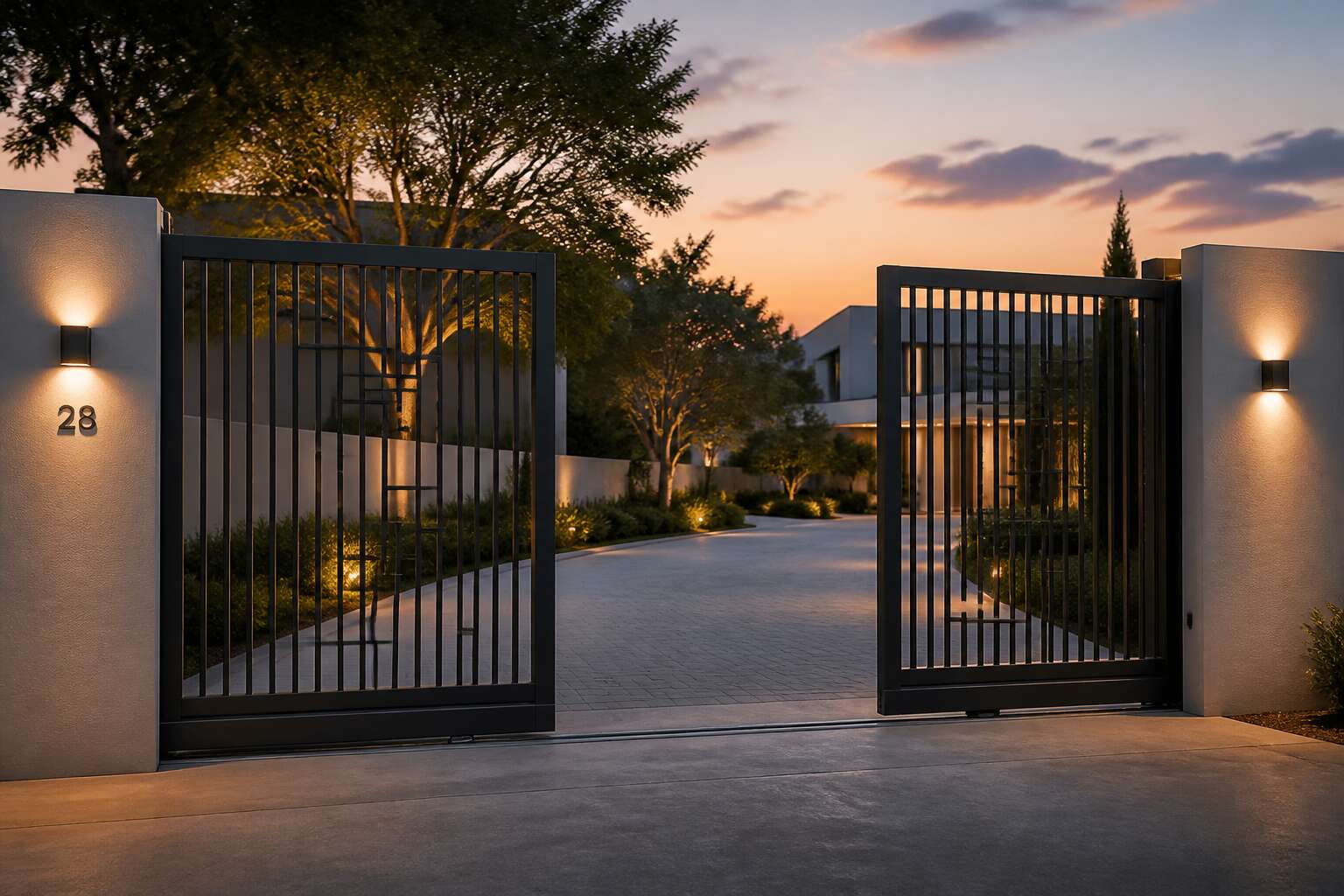
Key Considerations for Property Entry Systems
Assessing Your Compound Wall Structure
The weight of a sliding gate for compound wall is rarely a simple vertical load. In South African conditions, expansive soils and strong coastal winds subject your boundary structure to forces that a hinged gate never experiences. Before ordering hardware, you must assess the wall’s foundation depth and the integrity of its mortar joints. A weak or cracked wall will shift under the gate’s lateral thrust, causing misalignment. For a reliable installation, check these critical points:
- Ensure the concrete footing extends below the frost line or active soil depth.
- Measure the distance from the gate leaf to the wall surface to allow for wheel clearance.
- Inspect the corner pillars for vertical plumb, as they transfer the gate’s primary stresses.
The track and rollers only work when the wall remains static. Your sliding gate for compound wall relies on a perfectly level run, so any creep in the masonry becomes a recurring jam. Hire a structural surveyor if you see hairline cracks near the top beam.
Understanding Load and Track Requirements
A sliding gate for compound wall in the Cape Flats or the Highveld hides a brutal secret: the track is a structural spine, not a guide. Most failures start when the gate leaf exceeds the roller bearings’ rating or when the motor mounts twist under acceleration. Wind gusts and thermal expansion shift the entire assembly.
Consider the track profile. A 300kg leaf will deflect an inadequate runner by millimetres, and those millimetres become a chronic binding point. Measure the gate’s wheelbase against the track’s length and the wall’s tolerance. The motor for your sliding gate for compound wall must have enough breakaway torque to overcome rolling resistance and static weight.
- Check roller bearings for lateral play.
- Verify track vertical alignment within 3mm per metre.
- Confirm stop blocks are rated for the leaf’s momentum.
I have seen track bolts left finger tight. That is a slow disaster!
Choosing Between Manual and Automated Operation
Every property owner faces a quiet moment of indecision at the gate. The choice between manual and automated operation is psychological, not merely mechanical. Manual systems demand physical presence, a deliberate act of opening. Automation offers convenience but introduces dependencies. I have seen families choose manual for the ritual, while others crave effortless entry after a long shift.
Consider your daily rhythm:
- How often do you enter?
- Who uses the gate?
- What is your power reliability?
The sliding gate for compound wall must match your temperament. Automation can feel liberating or alienating, depending on your relationship with control.
Material Selection for Durability and Aesthetics
Material choice shapes both the gate’s lifespan and its daily presence in your life. In South Africa, the climate demands honesty from materials. Galvanised steel resists the coastal corrosion that eats lesser metals, while aluminium offers lightness without surrendering strength. The sliding gate for compound wall must endure wind, dust, and the occasional careless driver.
Consider these common options:
– Mild steel with powder coating: robust, but requires maintenance
– Stainless steel: premium feel, exceptional durability
– Aluminium: lightweight, corrosion resistant, modern appearance
Aesthetics matter beyond first impressions. The gate’s finish speaks to your property’s character before anyone reaches the front door. Choose a material that complements your wall’s texture and your home’s architectural language.
Popular Sliding Gate Configurations
Cantilever vs. V-Track Mounting
Across South African properties, the choice between cantilever and V-track mounting changes how a sliding gate for compound wall performs each day. Cantilever systems run on parallel rails inside the gate structure, lifting the panel clear of the ground. I have seen these excel on uneven driveways where a ground track would collect mud and stones. V-track mounting, by contrast, keeps a steel wheel on a fixed rail, often with a top guide bracket. This arrangement is simpler to install, but the exposed track demands regular cleaning.
Consider these points:
- Cantilever: no ground clearance issues, smoother on slopes.
- V-track: lower upfront cost, but track debris becomes a nuisance.
Each configuration suits a different sliding gate for compound wall scenario. The rolling action of a V-track gate feels brisk and predictable. Yet the cantilever’s lack of a ground channel provides an advantage on long spans.
Ornamental Iron vs. Aluminum vs. Steel
At many South African homes, the sliding gate for compound wall is judged within seconds of arrival. Ornamental iron configurations feature scrollwork and vertical bars, adding a classic layer of visual complexity. Aluminum, by contrast, uses extruded slats that create a sleek, uniform face. Steel configurations often combine flat panels with welded reinforcement, giving a straightforward appearance.
Each material changes your gate’s behaviour:
- Ornamental iron: ornate sections catch dust and demand careful welding.
- Aluminum: lightweight slats reduce strain on the motor.
- Steel: robust framing copes with frequent daily openings.
The configuration you choose also affects weight distribution, which matters for a sliding system. An ornamental iron gate might need a stronger cantilever setup, while an aluminum one offers an easy rolling action.
Single Slide vs. Double Slide Mechanisms
The most common mistake I see is assuming a longer gate needs a single slide. A single slide leaves the entire opening clear when closed, but demands a full-length track along the boundary. For most residential stands, this configuration offers the most direct path for a motor to push. I have seen many installers favour it for a standard sliding gate for compound wall, because it keeps the counterweight simple.
A double slide splits the gate into two leaves, each retracting to opposite sides. This halves the clear span for each leaf, which reduces the torsion on the guide rollers. It suits wider entrances where a single leaf would become unwieldy.
- Single slide needs roughly 1.5 times the opening width for the track.
- Double slide uses two motors or a synchronised drive, which adds cost.
The choice of a sliding gate for compound wall here depends on the boundary width. A narrow stand rarely justifies double slides, while a farm or estate entrance often requires them.
Customization with Modern Finishes
Your sliding gate for compound wall does not have to appear industrial. Modern finishes let you match the gate to your house, your boundary wall, or your personal sense of drama! In South Africa, the real test is how the finish survives UV, humidity, and the occasional bird strike.
A few popular configurations:
- Textured powder coating, which hides minor scratches from gravel or dogs.
- Wood-grain aluminium, which gives a timber look without the warping.
- Galvanised steel with a matte polyester topcoat, ideal for coastal areas.
Each option changes the maintenance schedule for this type of gate. From my experience, a cheap spray job looks fine for a season, then fades unevenly. Pay attention to the coating thickness and the primer, rather than only the colour.
Installation and Maintenance Essentials
Preparing the Foundation and Groundwork
Nearly 70% of sliding gate for compound wall malfunctions stem from neglected foundation preparation. The earth beneath your pivot point decides everything. Before pouring a single bag of cement, test the soil’s bearing capacity. Clay-heavy ground expands when wet, shifting your track alignment over the seasons.
Compaction is non-negotiable. Loose fill settles unevenly, creating stress points that crack the concrete bed. Use a vapor barrier underneath to prevent moisture wicking into the rebar. Direct stormwater away with a geotextile drain. Once cured, maintenance remains simple but constant. Walk the track weekly. Remove leaves and pebbles that jam the rollers.
- Check for hairline cracks in the foundation slab
- Re-torque anchor bolts after heavy rains
- Grease the roller bearings monthly
These small acts preserve the sliding gate for compound wall long after installation. No grand intervention, only patient observation.
Step-by-Step Fitting Process
They say a gate must be coaxed into its home, not forced. I have fitted a sliding gate for compound wall installations where the steel itself seemed to resist. The secret lies in the humble sequence of bolts. Start by wheeling the gate into its track, listening for any drag. Then align the bottom bracket with the pivot point, shimming where the concrete breathes.
Tighten the carrier bracket first, never the guide roller. The order matters.
- Set the gate on its wheels.
- Check the sag against a plumb line.
- Fix the top guide with light pressure.
- Torque all fasteners in a cross pattern.
Finally, test the swing by hand. A stiff glide means the track is true. A shudder means the earth still claims its due.
Routine Maintenance for Smooth Operation
Once the bolts are torqued and the gate glides home, the real work begins. A sliding gate for compound wall demands attention. Rust is the obvious concern, but dirt inside the track is the quiet one. South African wind and red dust settle into every gap. A stiff brush clears the rail of grit that wears down the wheels over time.
- Clean the track and bottom wheel path weekly.
- Lubricate rollers and guide brackets every three months with lithium grease.
- Retighten carrier and bracket bolts with a torque wrench.
- Inspect the operator chain and limit switches on automated units.
Too much oil attracts dust, so keep the grease coat thin! Thirty minutes every quarter prevents a full weekend of repairs. No finish or motor upgrade will save a neglected sliding gate for compound wall. Maintenance is what keeps your property secure and your day predictable.
Troubleshooting Common Issues
A sliding gate for compound wall rarely fails without warning; it usually throws a tantrum first. The motor hums but refuses to move, or the gate jerks sideways and scrapes the ground. In South Africa, the most common culprit is not rust but voltage fluctuation during load shedding. A motor designed for 220V can struggle on a 190V supply, tripping its thermal overload.
Mechanical misalignment follows closely. Heavy rain can shift the foundation, causing the gate to sag or bind against the stop post. Check the alignment of the brackets and the level of the track before assuming the motor is dead.
- Reset the overload button and let the motor cool down.
- Re-level the V-track if water pooling is visible.
- Adjust the limit switch to prevent the gate from slamming into the bumper.
Addressing these faults early saves the operator from a complete burnout. A sliding gate for compound wall depends on clean electrical supply and a level base. When the mechanics complain, listen to the sound they make.
Cost, Safety, and Automation Features
Pricing Breakdown for Materials and Labor
R30,000 can vanish before a sliding gate for compound wall moves an inch. That figure covers materials only, not the electrician or the concrete team. In South Africa, labor often eats 40% of the budget, especially when the site demands rebar reinforcement or careful alignment.
Safety features add another layer. Photoelectric beams, emergency brakes, and manual release mechanisms push the price upward. A basic automation kit starts near R8,500, but advanced units with battery backup and vehicle detection climb past R25,000.
- Materials: R12,000 to R30,000 depending on steel gauge and finish
- Labor: R6,000 to R15,000 for installation and wiring
- Automation: R8,500 to R25,000 including sensors
Every rand spent on safety reduces liability. I recommend budgeting for a torque limiter, since a sliding gate for compound wall that traps a child’s hand is a serious legal risk.
Safety Sensors and Anti-Collision Systems
Cost alone never tells the full story of a sliding gate for compound wall. The real expense hides in what you cannot see: the safety systems. Photoelectric beams and anti-collision sensors do more than protect visitors. They protect you from liability. A gate that closes on a car or a child becomes a legal nightmare.
Automation features vary widely. Some systems offer simple remote control. Others include battery backup and vehicle detection. The difference in price reflects the difference in protection. Here is what you should expect:
- Photoelectric beams detect obstacles before contact
- Torque limiters stop the motor when resistance spikes
- Manual release mechanisms allow operation during power failures
Every rand spent on these sensors reduces your risk. A sliding gate for compound wall without proper anti-collision features is a liability waiting to happen.
Remote Access and Smart Home Integration
Cost remains a deciding factor, yet the true value of a sliding gate for compound wall rests in what it protects. A cheap system without backup power or secure access can fail when you need it most. Safety and automation are not separate line items. They form the foundation of a reliable entrance.
Remote access and smart home integration have changed how owners interact with their property. You can monitor the gate from anywhere, receive alerts, and grant entry to visitors without leaving the house. Battery backup keeps the gate operational during load shedding. Consider these useful features:
- Smartphone control with real time notifications
- Integration with existing home security systems
- Automated scheduling for regular opening times
These options raise the initial price but reduce daily friction and long term risk. Choose the features that match your routine and your security needs.
Backup Power and Emergency Release
When load shedding strikes, a sliding gate for compound wall that relies solely on mains electricity becomes an obstacle. The cost of backup power, a 12V battery, is modest compared to being locked out. It pays for itself in one blackout.
Emergency release mechanisms deserve equal attention. A manual key release or mechanical lever works only if tested regularly. Many units have a cord that snaps or a lock that seizes after months. Check these components quarterly, keep a spare key accessible.
Safety related automation features include:
- Battery backup that switches over in under a second
- Emergency release with a visible status indicator
- Low battery alarm that reports to your phone
The true cost of a sliding gate for compound wall includes downtime. A cheap gate that fails during a blackout is not a bargain. Backup power and emergency release determine whether the gate works when you need it most.
Compliance with Local Security Standards
In South Africa, the cost of a sliding gate for compound wall extends beyond hardware. Local security standards, such as SANS 1390, mandate specific automation features. A gate that misses mandated safety functions will not pass inspection. Municipalities and insurers require proof of compliance.
- Electrical earthing verification
- Installer certificate of compliance
- Insurance approval documentation
These items add to the budget, but they are not optional. Automation features that meet these standards reduce legal exposure and protect pedestrians. When comparing quotes, ask for the compliance certificate. A gate without that paperwork becomes a liability.
Long-Term Value and ROI
Every sliding gate for compound wall carries an initial price. The long term cost includes safety measures and automation. Photocell sensors and torque limiters add to the budget. They prevent injuries and property damage that would cost far more. Automation provides efficiency, yet its true value appears through reduced liability.
I have seen buyers ignore the compliance paperwork. They underestimate the penalties. A gate that meets SANS 1390 requires higher spending upfront. But noncompliant gates face insurance rejections and municipal fines. Those financial consequences outweigh any savings.
The return on investment unfolds over years. A robust sliding gate for compound wall with reliable automation lowers repair frequency and extends the gate’s working life. Energy efficient motors reduce monthly electricity. A compliant installation also improves property value and reduces stress.
- Lower maintenance frequency
- Reduced insurance premiums
- Higher resale attractiveness


0 Comments