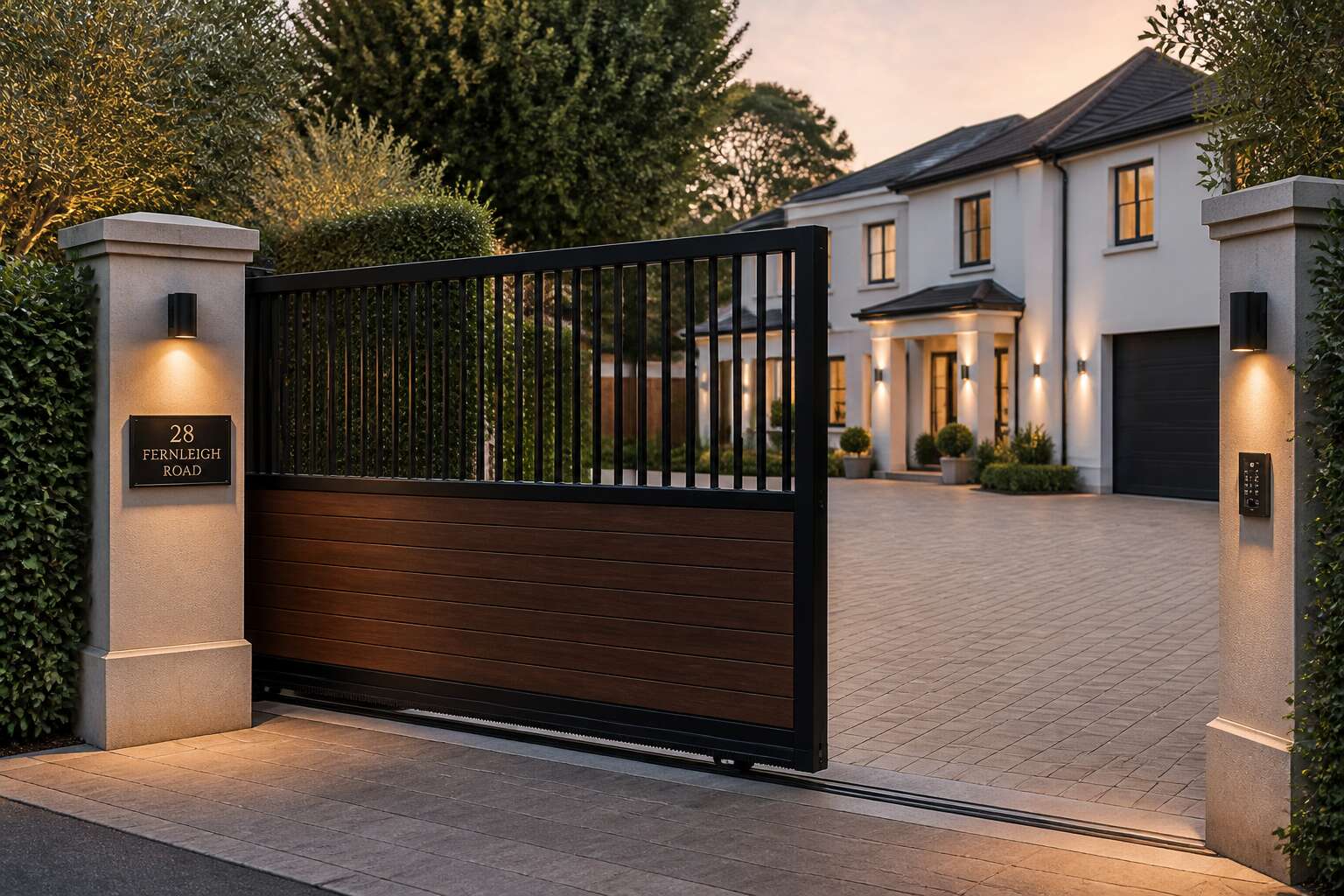
Cost Factors That Influence Sliding Electric Gates
Gate Size and Material
The dimensions of the opening are the primary drivers of the final quote. A wider span requires a longer gate leaf, a heavier counterbalance, and a more substantial concrete foundation for the track. When clients ask me about the sliding electric gates cost uk, I explain that while the baseline prices overseas vary, the local market here in South Africa is governed by the same physical constraints: larger simply means more expensive.
Material selection then takes over. Commercial grade aluminium resists rust but costs a premium. Galvanised steel offers strength but demands regular attention against the elements. The material affects the motor capacity required, which is a separate expense.
- Mild steel is cost effective but prone to corrosion.
- Stainless steel is robust yet heavy, increasing the linear guide rail thickness needed.
- Aluminium is lightweight, reducing the strain on the electric motor.
It is worth noting that a modest rise in material thickness or size drastically impacts the sliding electric gates cost uk comparisons, but the specific exchange rate rarely benefits the local buyer.
Automation Kit and Motor Type
Almost 80% of automation failures trace back to an undersized motor. The sliding electric gates cost uk often masks this issue until the first rainy season. A kit that handles a dry summer gate may stall when winter moisture adds friction.
Motor type dictates the duty cycle. Intermittent motors suit residential gates, while continuous-duty motors handle commercial properties. The control board, gearbox, and limit switches all shape the price. Motor power ratings, measured in Newtons, determine lifting capacity.
Compare these automation components:
- Drive type: rack and pinion versus worm gear
- Braking system, especially for sloping driveways
- Safety features such as photocells and torque limits
In South Africa, load shedding makes battery backup essential. Solar compatibility and smart home integration push the price higher. The final quote rarely includes these extras, but they can shift the total budget by a third. That’s a non-negotiable!
Installation Complexity and Site Access
Installation complexity often depends on the terrain between the gate and the control room. A straight, level concrete base allows a straightforward mount, while cracked slabs or loose gravel demand additional foundation work. That unseen preparation can shift sliding electric gates cost uk more than the hardware itself!
Site access also dictates the labour hours. If the delivery truck cannot reverse near the gate, every rail and motor unit travels by hand. Narrow passageways, steep banks, or waterlogged soil all add to the crew’s time. Consider these common accessibility constraints:
- Distance from the nearest power source
- Existing wall or pillar alignment
- Underground cables or irrigation lines
Each factor forces a bespoke solution, whether extending conduit runs or repositioning the gate posts. In South Africa, load shedding may even require a dedicated inverter position, which changes the cabling layout. These site-specific details rarely appear in advertised packages, yet they shape the final invoice.
Additional Features and Safety Compliance
Additional features carry costs that only surface after the quotation stage. Safety photocells, traffic lights, and ground loop detectors each arrive as separate line items, with dedicated wiring and commissioning time. In South Africa, a battery backup or solar-ready inverter is practically essential, yet the advertised sliding electric gates cost uk rarely includes them. Safety compliance adds another layer. Emergency release mechanisms, edge sensors, and audible alarms must be fitted to current standards, and the inspection paperwork itself carries a fee. In my experience, that fee is rarely trivial! Common extras include:
- Induction loops or radar-based vehicle detection
- Video intercom systems with remote unlocking
- Dual-channel safety edges and warning lights
Every extra component extends the wiring schedule and the programming session. Photocell alignment alone can consume half a day on uneven driveways. Many buyers compare quoted figures without realising that these tacit necessities remain absent until a final invoice arrives.
Sliding Electric Gate Price Ranges by Type
Canalette and Cantilever Gates
Sliding electric gates cost uk estimates often split by the running gear, and the tracked, canalette system typically comes in lower on the invoice because it hides a stealthy cost in that buried guide rail. Soil conditions dictate that excavation, and I’ve seen quotes double when stubborn rock appears.
Cantilever gates, conversely, abandon the ground track entirely. Their price shifts toward the heavier steelwork used for the counterbalance and the specific hinge posts that transfer hundreds of kilograms of sideways force from the moving leaf.
- Canalette suits flat, level drives with compacted bases.
- Cantilever solves slopes, leaves, and gravel that would jam a rail.
So the sliding electric gates cost uk average most suppliers quote for the motor alone misses the structural stakes. Your exact figure hinges on which deficit your land presents, not a standard tariff.
Cast Iron and Wrought Iron Designs
Cast iron gates carry a price premium before any motor enters the scene. The metal is poured into moulds, which makes complex scrolls and floral panels expensive to reproduce. A simple cast iron leaf starts near the same point as a high end wrought iron design, but custom details push the figure upward rapidly.
When I examine sliding electric gates cost uk, the gate’s weight becomes the silent contributor. Cast iron’s density forces a stronger motor and heavier track system, while wrought iron’s open latticework reduces both dead load and automation strain. This distinction shows itself in the final quotation.
- Cast iron price ranges increase with ornamental complexity
- Wrought iron allows thinner bars without sacrificing security
- Cast iron gates often require reinforced pillars and hinges
The choice reflects your property’s character. A modern townhouse suits wrought iron’s clean lines, while a farmstead entrance earns cast iron’s permanence. Your sliding electric gates cost uk then becomes a story of weight, detail, and the land beneath.
Aluminium and Steel Options
Steel and aluminium cover most residential gate orders. Their price ranges follow clearer logic than cast iron ever offers. Aluminium resists corrosion, vital when coastal Cape Town salt air attacks the frame. Steel offers raw strength at a lower entry point but demands paint or galvanising over time.
The difference between these two materials affects sliding electric gates cost uk more than any ornamental flourish. Aluminium runs lighter and quieter, so the motor carries less strain. Steel runs heavier and cheaper, so the automation kit works harder.
Here is the practical breakdown:
- Aluminium gates: from R45,000 to R120,000 installed
- Steel gates: from R38,000 to R95,000 installed
- Aluminium prices reflect material cost and welding precision
South African sunlight does not tolerate cheap powder coating, trust me! Choose steel for budget reasons and budget for primer and top coats. Labour costs push the final sliding electric gates cost uk figure upward faster than material upgrades.
Timber Sliding Gates
Timber sliding gates bring a tactile warmth that steel rarely achieves! In Cape Town, Balau and Meranti resist rot better than pine, but they also push the sliding electric gates cost uk calculation upward. A motorised timber gate needs a sturdy frame and regular sealing against the sun. The automation kit must suit the gate’s weight, and heavy hardwood demands more from the motor than aluminium ever does.
- Balau gates range from R60,000 to R150,000 installed
- Meranti gates range from R45,000 to R110,000 installed
- Recycled timber might cost less but needs extra treatment
If you choose timber, budget for annual oiling and potential warping. The final price hinges on the wood’s grade, not just its thickness. For many homeowners, the natural grain justifies the premium over metal options.
Automated Sliding Gate Packages
Sliding electric gates cost UK enquiries often leave South African homeowners raising an eyebrow. Package pricing abroad bundles items we take for granted. Automated sliding gate packages locally offer a different bargain.
A basic automation package for a lightweight gate, including motor and two remotes, starts around R18,000. A heavy-duty set with battery backup and keypad sits closer to R45,000. Some suppliers bundle the gate itself into the quote.
– Concrete pad foundation included
– Lockable motor cover and ground track
– Safety photocells and warning light
The sliding electric gates cost UK figures look tempting until you add import duties and exchange rates. Suddenly, the local balance of price and practicality becomes charming.
Installation and Labour Costs in the UK
Local vs National Installers
The sliding electric gates cost uk is rarely a fixed number. It divides between the local craftsman and the national corporation. A local installer relies on word of mouth, so their labour quote often reflects meticulous attention to site specifics. National companies bring bulk buying power, but their labour margins cover regional travel and call centres.
- Concrete pad curing time
- Armoured cable installation
- Final calibration and testing
These line items appear in both quotations, yet their pricing differs dramatically. Local workers may charge a higher hourly rate, while national teams spread their costs across many jobs. Ultimately, the final bill depends on who carries the burden of your specific ground conditions.
Groundworks and Concrete Base Requirements
The concrete base is the silent partner in any automated gate. Without a level, cured pad, the motor fights itself, and the whole sliding electric gates cost uk climbs. Labour charges for groundworks in the UK depend heavily on the soil beneath your drive. Chalk, clay, or reclaimed ground each tell a different story to the digger. A slab that needs deeper footings or steel reinforcement adds hours to the job.
For a standard four metre gate, the pad usually runs 600mm wide by 900mm deep, though that is only a starting point. Groundworkers bill separately for excavation, formwork, and the concrete mix itself. Curing alone takes a week, during which no gate track can be mounted. Some installers hide this wait inside their quote; others surface it as an explicit line item.
These site conditions directly lift the sliding electric gates cost uk:
- Soil type and existing drainage
- Access for a mini digger to the pad area
- Removal and disposal of excavated spoil
Armoured cable belongs in the same trench, yet it is priced per metre from the house supply. The longer that run, the more the labour estimate stretches. The sliding electric gates cost uk here reflects not just copper and conduit, but the certified skill of connecting the motor to a safe, isolated feed.
Electrical Supply and Wiring Costs
Electrical work often arrives as an unexpected line in the quotation. The sliding electric gates cost uk can leap when the nearest supply point sits on the other side of the house. A simple driveway demands a trench, an earth loop impedance test, and a weatherproof isolator.
In the UK, a licensed electrician must sign off the circuit under Part P. That certification costs money. Hourly rates differ between London and a rural job in Cumbria. Ask about the distance from your consumer unit to the gate before comparing quotes.
Consider a few practical details:
- Cable depth under hard landscaping
- Route across a driveway or flowerbed
- Upgrade to your existing consumer board
Each adds to the labour, but none is a sensible place to save money.
Permits and Planning Permission
Labour charges for installing an automated sliding gate rarely match the quote. A skilled two person crew charges between £300 and £500 per day, and most residential installations take two to three days. That places the installation portion of the sliding electric gates cost uk between £600 and £1500 before parts. Regional rates shift this figure. London and the South East command a premium, while Scotland or the North East price more modestly. I have seen the same motor and track quoted £400 higher based on postcode alone!
Planning permission is separate. Most domestic sliding gates fall under permitted development, so you can proceed without a formal application if the gate stays below 2 metres. Consent becomes necessary when:
- Listed property
- Public highway frontage
- Conservation area location
A pre application enquiry to your local council costs nothing and avoids an expensive removal order later. The sliding electric gates cost uk should include this due diligence.
Hidden Charges to Watch For
Few things inflate the final price of a gate installation faster than a quote with vague line items. The installer’s day rate rarely tells the whole story. I have seen invoices where travel time was billed at full rate for a two hour drive each way, then a separate fuel surcharge appeared. Keep an eye out for these extras:
- Engineer call-out fees for programming the motor.
- A site survey charge after you already paid for a visit.
- Disposal costs for the old gate, if they haven’t said so.
These add up quickly. Ask for a fixed price, or the sliding electric gates cost uk will creep upwards.
Ongoing Costs and Maintenance Considerations
Annual Servicing and Inspection
Most homeowners forget their gate exists until it stops working. The sliding electric gates cost UK buyers budget for rarely covers the annual maintenance that keeps the system alive. A yearly service is not optional if you want the motor to last.
The inspection itself takes about an hour. The engineer will check:
- Gearbox oil levels and condition
- Photocell alignment and sensitivity
- Safety edge response and pressure
- Track bolts for wear and corrosion
- Drive belt tension and condition
That visit usually costs between £80 and £150. I’ve seen owners skip it to save money, then face a repair bill three times that figure. A misaligned sensor or a worn belt can damage the entire drive unit. For the sliding electric gates cost UK buyers see upfront, the annual fee remains a fraction of the total. Skip the service and the eventual failure will cost you far more.
Repairs and Replacement Parts
Repairs arrive without warning, and the sliding electric gates cost uk buyers research before installation rarely includes the replacement parts that follow. A snapped drive belt or a burnt out motor capacitor turns a working gate into an obstruction overnight.
I have seen control boards fail after a surge, and the part alone costs between £300 and £600. Wheel sets wear down after years of heavy use. Photocell beams go out of alignment. Each repair carries a call out fee plus the part price. Typical replacement part costs include:
- Control board: £300 to £600
- Drive belt and tensioner: £80 to £150
- Motor gearbox: £400 to £900
- Track wheels and brackets: £150 to £400
These numbers sit on top of the original installation. The sliding electric gates cost uk figures quoted by installers rarely mention consumables, yet every automated gate wears through them eventually! Owners who source cheap overseas components find that replacement parts become a waiting game.
Insurance and Warranty Implications
Insurance underwriters treat automated gates as mechanical assets with liability exposure. A sliding electric gates cost uk estimate rarely includes the premium adjustment that follows installation. Some South African insurers require proof of annual servicing before covering gate related claims. Without documentation, a malfunction that injures someone becomes a personal liability.
Warranty terms are equally strict. Most manufacturers void coverage if non approved components are fitted. I have seen homeowners lose a five year warranty by letting a handyman adjust the limit switches. The sliding electric gates cost uk figures quoted at purchase assume factory specified parts and certified installers.
- Check whether your warranty requires specific service intervals
- Confirm insurer notification requirements after installation
- Keep all inspection certificates for claims disputes
Energy Consumption of Electric Motors
The sliding electric gates cost uk quoted by suppliers rarely includes the true ongoing energy consumption of the motor. I have seen property owners in Johannesburg ignore this until their Eskom statement arrives!
- Quiescent current for radio receivers and control boards
- Frequency of daily cycles
- Mechanical resistance from a neglected track
A gate that cycles fifty times a day can consume a surprising amount of power. This ongoing cost exists independently of the initial quotation, demanding a permanent line item in your monthly operating budget.
Upgrades for Smart Home Integration
Smart home integration turns a sliding gate into a connected device, but the sliding electric gates cost uk quoted by installers rarely covers what happens after the gate goes live. Firmware updates, cloud subscriptions and replacement sensors all land on your monthly budget, often without warning.
Maintenance shifts when you add automation. The mechanical track still needs ordinary attention, but now you also manage:
- WiFi signal strength near the gate controller
- Battery backups for the smart lock interface
- Software compatibility with your home network
In my experience, these items fail without obvious signs. You only notice when the gate stops responding to your phone, and by then the repair costs more than the original smart module.
Popular Automation Brands and Their Pricing
Came, FAAC, and GfA Motors
Came, FAAC, and GfA are the three brands you will see on most automated sliding gate installations in the UK. Pricing differs noticeably. FAAC motors are generally the most expensive, with premium kits starting near £800. Came sits mid-range, offering dependable gear from about £500. GfA is the budget option, with basic motors available around £350.
Component quality explains much of the gap. FAAC uses heavier-duty parts with a strong record on commercial gates. Came provides a wide range of retrofit kits for existing manual gates. GfA focuses on simple, reliable domestic motors.
- FAAC: £700 to £1,200 installed
- Came: £500 to £900 installed
- GfA: £350 to £700 installed
A sliding electric gates cost uk estimate must factor in these differences. The motor alone rarely tells the full story.
BFT and Beninca Systems
BFT and Beninca occupy a quieter corridor of the automation market. BFT, an Italian brand with deep engineering roots, tends to appear on larger residential estates and light commercial sites. Beninca pursues the practical middle ground, offering dependable mechanics without extravagant pricing. Both systems perform well, yet the final invoice depends more on local support than on the motor itself.
BFT motors often require a specialist installer. Fewer UK engineers carry spares on the van, so callout fees rise. Beninca benefits from a simpler parts network and quicker setup times. For a sliding electric gates cost uk estimate, this means Beninca frequently lands below BFT on the signed quote.
- BFT: £650 to £1,150 installed
- Beninca: £450 to £850 installed
Neither brand dominates domestic driveways. Choose based on which engineer within your region knows the unit best, because a familiar technician will finish the job faster and charge less for their hours. That familiarity often trumps brand prestige.
UK-Niche Manufacturers
Beyond the household names, UK installers occasionally suggest Roger Technology or Ditec drives. These niche manufacturers rarely stock spare parts locally, which affects the final sliding electric gates cost uk quote if something breaks later. Roger Technology produces clean, straightforward motors that suit moderate driveways. Ditec, owned by ABB, offers heavier engineering but slower delivery times for replacement boards.
Then there is Sommer, a German maker known for precise gearboxes and silent operation. Sommer installs require patience because only a handful of UK engineers hold the training certificate. For a sliding electric gates cost uk comparison, the equipment price stays moderate, but technician hours climb when the engineer must relearn an unusual system.
- Roger Technology: £500 to £900
- Ditec: £700 to £1,200
- Sommer: £750 to £1,300
Remote Control and Accessory Costs
When installers quote a sliding electric gates cost uk, the motor brand often dominates the line item. But the true expense hides in accessories. Remote controls are consumables, prone to loss or battery failure. A single transmitter from brands like Key Automation or Centsys costs £30 to £80. Order three and the price climbs quickly!
Beyond remotes, the receiver board converts radio signals into movement. A replacement board runs £120 to £250. Photocells, the safety eyes that stop the gate, add £90 to £180. Warning lights, keypads, and backup batteries stack further.
- Remote control: £30 to £80
- Receiver board: £120 to £250
- Photocell pair: £90 to £180
- Digital keypad: £100 to £220
These extras turn the sliding electric gates cost uk from a basic motor swap into a fuller project. Homeowners who ignore them face unexpected invoices on installation day.

0 Comments