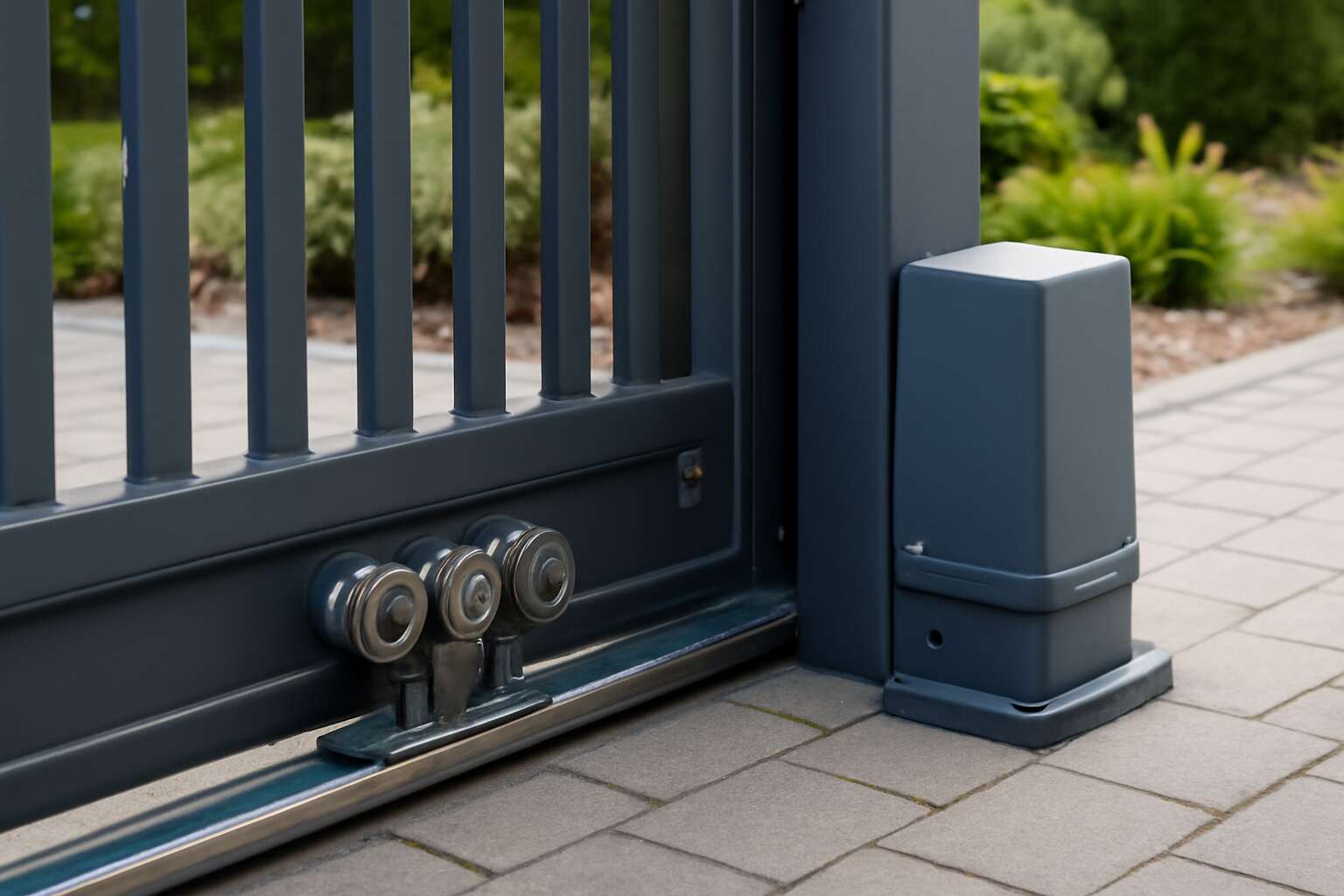
Sliding Gate System Overview
Gate System Essentials
An efficient sliding gate system protects property and speeds routine access. Engineering the right setup means fewer jams and less downtime, even in South Africa’s bright sun and dusty days. “Reliability is the foundation of security,” customers tell us, and their gates prove the point when the shift from idle to open is instant!
At the heart of any operation are the sliding gate components that keep motion smooth and predictable.
- Track and rollers
- Gate leaf and frame
- Drive motor and control system
We see this in the field every day. In South Africa, coastal conditions with salt air, dust and heat demand robust finishes and seals. A dependable setup minimizes downtime and keeps access flowing without fuss.
Mechanical Components
In the tempo of a busy South African site, a sliding gate isn’t just a barrier—it’s a gateway to a smoother day. Field data show up to 40% downtime on outdoor gates, often due to weathered components and modest misalignment, a sobering reminder that sliding gate components decide the pace of access.
Beyond the obvious rails and motors, the quiet work happens in seals, linkages, and safety switches. From years on SA sites, we’ve learned that these quieter components make or break reliability. Coastal conditions—salt air, dust, heat—call for finishes that resist corrosion and seals that keep grit at bay, ensuring motion stays reliable when the sun is harsh.
- Weatherproof seals and gaskets
- Limit switches and safety interlocks
- Lubrication points and corrosion-resistant finishes
Together, these sliding gate components create a durable rhythm between access and security, a small philosophy in metal that keeps entrances open without interruption.
Power Drive and Control
On bustling South African sites, the right power drive trims average wait times by up to 25%, turning a chokepoint into a clear lane. Sliding gate components rely on a smart dance between motor, gearbox, and control logic, so the gate moves with authority rather than coughs follow. Power drive and control form the heartbeat of a gate that opens when needed and stays put when security says no.
Behind the scenes, the control suite translates commands into confident motion.
- Rack-and-pinion or belt-drive options tailored to gate weight
- Variable speed with soft-start to curb wear
- Access control integration and safety interlocks
Diagnostics and remote alerts keep oversight sharp, so downtime is the exception rather than the rule.
Safety and Maintenance
Across busy South African sites, a well-tuned sliding gate system trims entry delays by up to 25%, turning a chokepoint into a clear lane. Sliding gate components are more than metal and motors; they are a discipline—reliable, safe, and quietly determined to move with authority.
Safety and maintenance aren’t afterthoughts; they’re built into every hinge and sensor. Here are hardware priorities that sustain performance:
- Corrosion-resistant finishes suited to SA climates
- Sealed rails and housings to resist dust
- Redundant safety interlocks and monitored limits
Diagnostics and remote alerts keep oversight sharp; downtime is the exception. In SA, this translates to data-driven insights that guide service windows and extend the life of sliding gate components.
Installation and Sizing
Across SA sites, sliding gate components that are properly sized and installed turn chokepoints into clear lanes, trimming entry delays by up to 25%. The overview focuses on compatibility with gate leaf mass, track geometry, and the right drive profile to ensure smooth, predictable operation. Site-specific factors—traffic flow, space constraints, and climate—drive sizing decisions and long-term reliability.
Installation and sizing hinge on three pillars: physical fit, electrical readiness, and safety margins. Key sizing and installation considerations include:
- Gate leaf weight and length
- Track alignment and rail condition
- Drive torque, speed, and control compatibility
- Dust, wind, and corrosion protection for SA environments




0 Comments